Describe the app. Review the difference.
A description becomes a state machine, a schema and the interface derived from it — assembled from parts that already work.
Open the workspace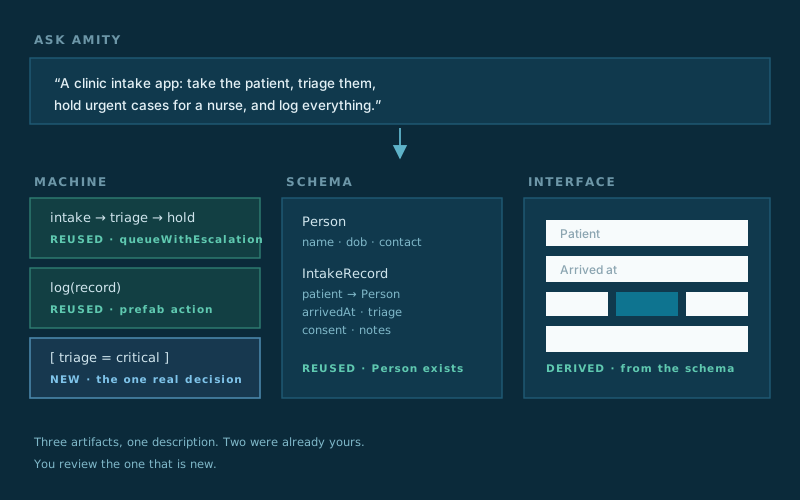
Generated code you cannot review is a liability.
Ask most assistants for an app and you get a thousand plausible lines to audit. Ask Amity and you get a machine assembled from prefabs you already trust, a schema, and one genuinely new decision marked as new.
DERIVED INTERFACES
The schema is the source. The screen follows.
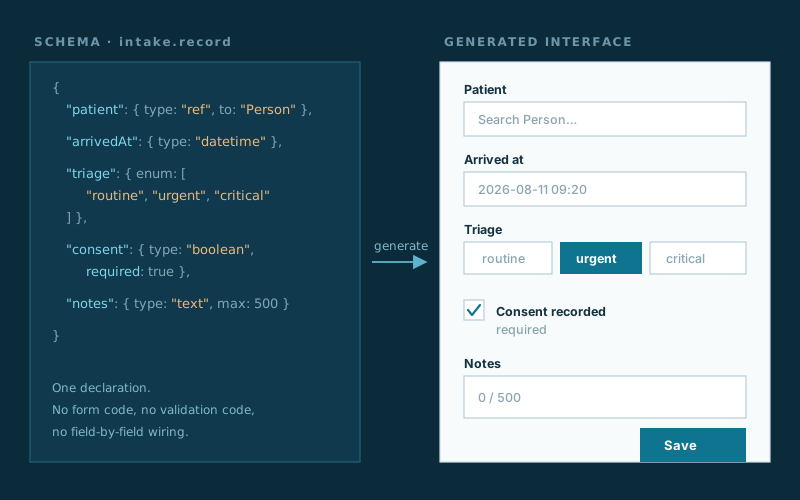
Declare the record once — its fields, its types, what is required, what it points at — and the form, the validation and the table come from that declaration. Change the record and the screens change with it, because they were never written separately.
What the workspace gives you
A small app is a machine, a schema and a screen. Oceano gives you all three, and the seams between them.
Ask Amity
Describe what the app should do in a sentence. What comes back is structure you can read, not a wall of generated code.
Behaviour as machines
Every generated app is an XState machine, so its behaviour can be simulated, diffed and corrected — the same artifact Robotiza authors by hand.
Prefabs, not fresh guesses
Amity assembles from a library of proven actions and sub-machines first, and writes something new only when nothing fits.
Interfaces from schemas
Forms, tables and detail views are derived from the schema, so the screen cannot fall out of step with the record behind it.
Knowledge that keeps its shape
Entities and the relationships between them stay first-class and traversable instead of flattening into prose nobody can query.
One identity
The same platform sign-in as the other SpecFocus products — no separate account to manage.
Say what it should do. Read what changed.
Sign in to open a workspace and ask for your first app.